

How Things Work 2-minute video · ages 4-8 · free coloring page
How do twinkly lights light up?
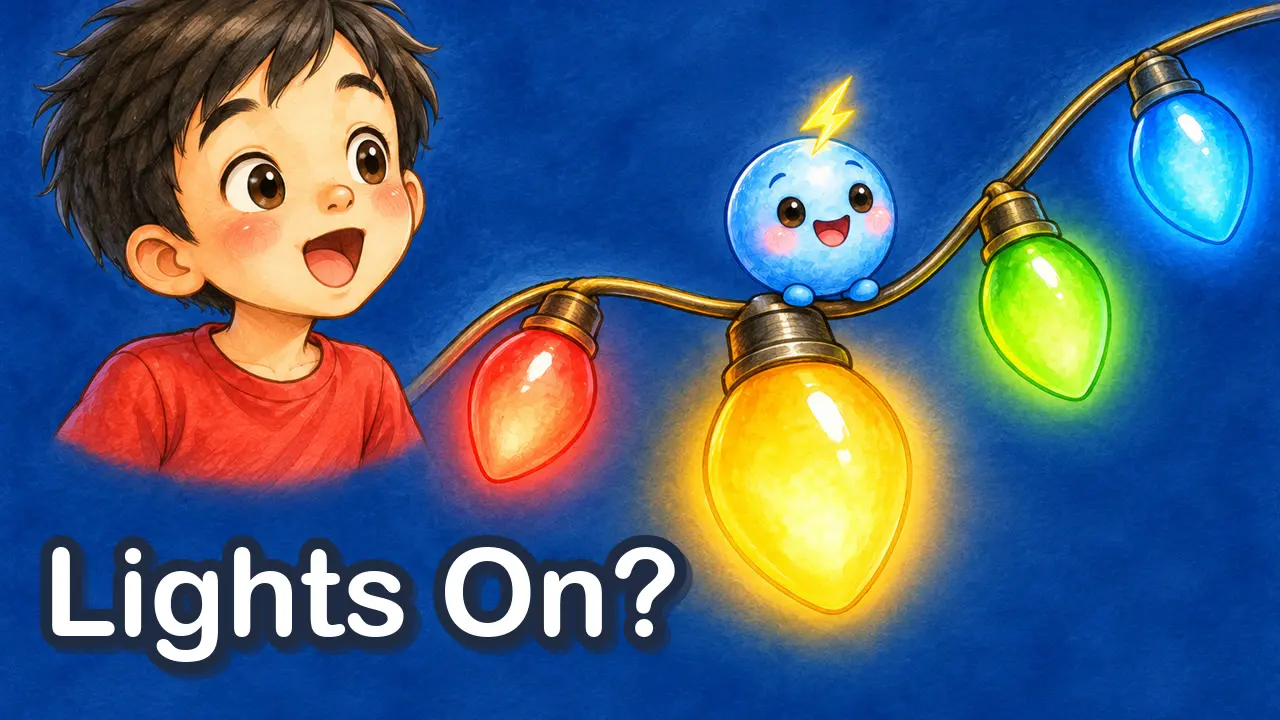
Click! Whoa! How do twinkly lights light up?
 2 min
If the video does not start, use the YouTube button.
Print, color, try
Free coloring page
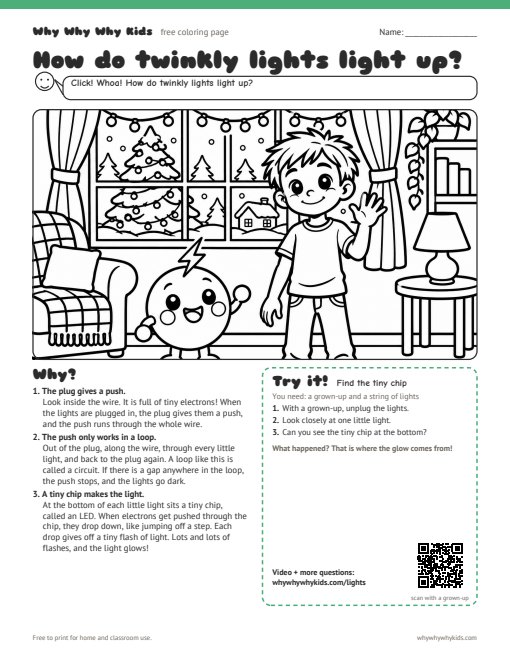
The scene from the video as a coloring page, plus the three-sentence answer, the experiment, and a QR code back to this page. One sheet, US Letter, black and white.
The answer in three parts
Why?
-
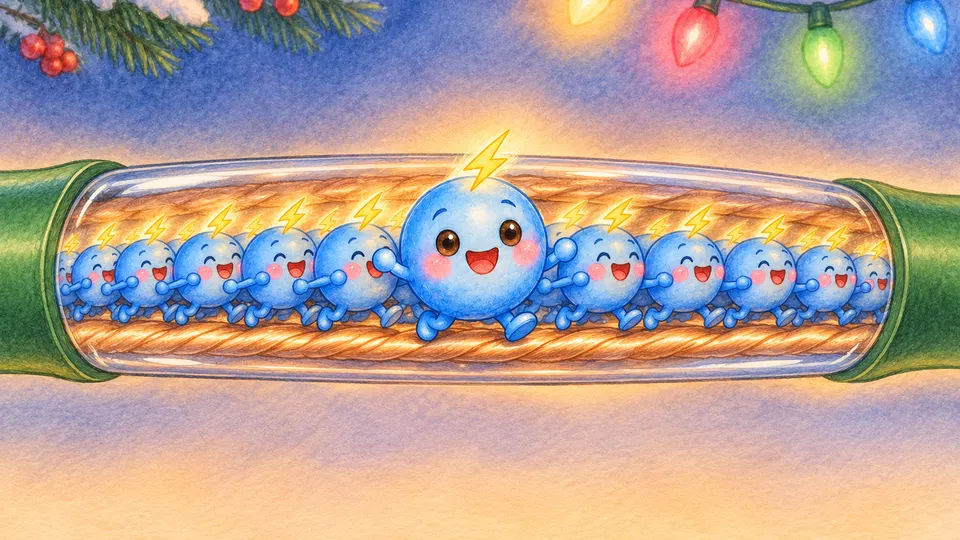
The plug gives a push.
Look inside the wire. It is full of tiny electrons! When the lights are plugged in, the plug gives them a push, and the push runs through the whole wire.
-
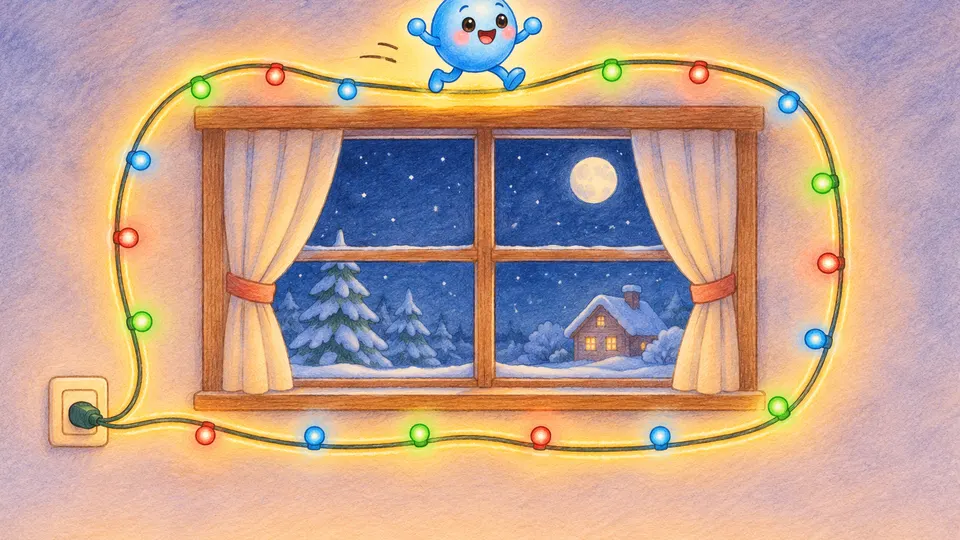
The push only works in a loop.
Out of the plug, along the wire, through every little light, and back to the plug again. A loop like this is called a circuit. If there is a gap anywhere in the loop, the push stops, and the lights go dark.
-

A tiny chip makes the light.
At the bottom of each little light sits a tiny chip, called an LED. When electrons get pushed through the chip, they drop down, like jumping off a step. Each drop gives off a tiny flash of light. Lots and lots of flashes, and the light glows!
For grown-ups: Holiday lights use real electricity from the wall. So never touch plugs or sockets. Ask a grown-up to plug the lights in, and to unplug them.
How the lights work
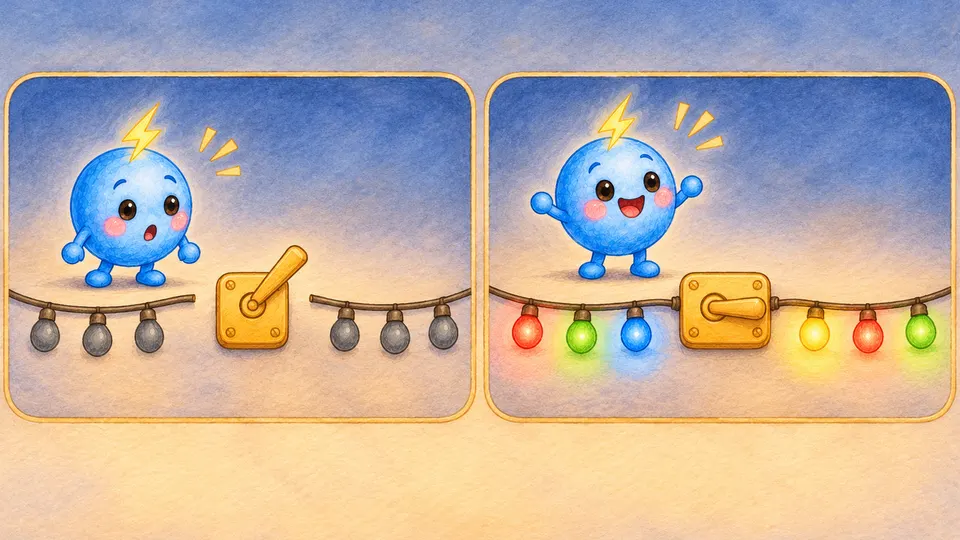
- Switch offmakes a gap - the lights go dark
- Switch oncloses the gap - the loop is whole
- Chip colorone kind red, one green, one blue
- Twinklea tiny switch turns them off and on
A tiny experiment
Try it!
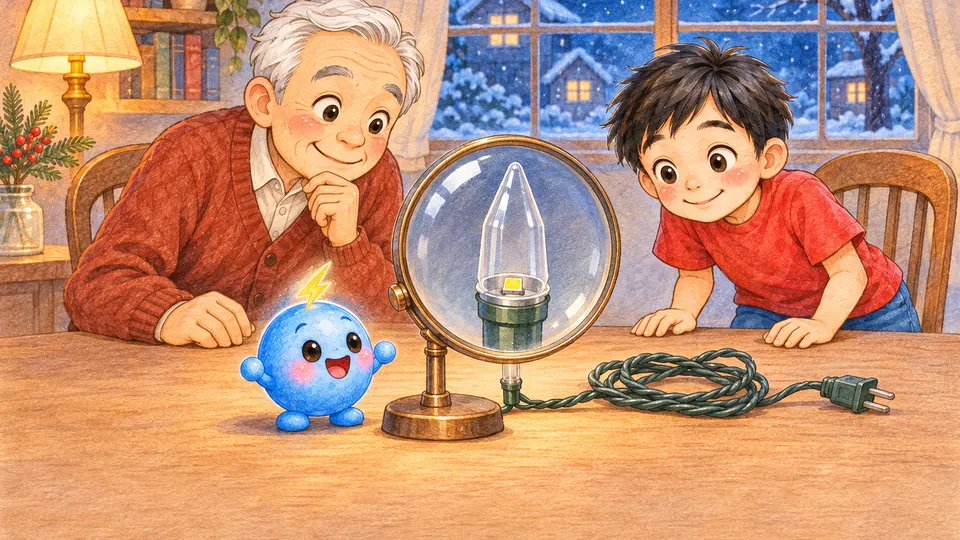
Find the tiny chip
You need: a grown-up and a string of lights
- With a grown-up, unplug the lights.
- Look closely at one little light.
- Can you see the tiny chip at the bottom?
What happened? That is where the glow comes from!
Did you know?
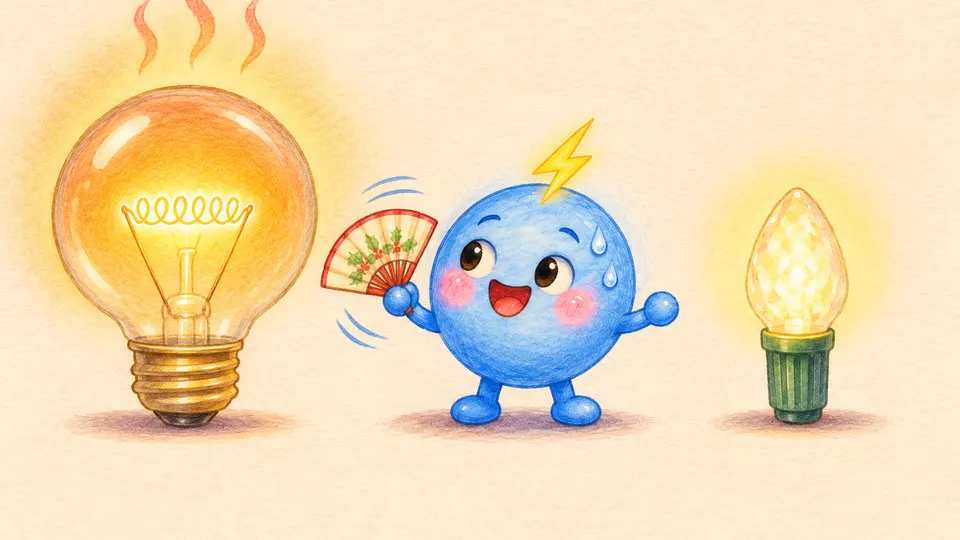
Old-style lights have a very thin wire inside, and the electricity makes it so hot that it glows. Most of their energy turns into heat. LED lights make much less heat.
In old twinkly bulbs, the tiny switch was a metal strip that bends when it gets warm!
For teachers Grades K-2 · discussion and printables
A curiosity question with no matching K-2 NGSS performance expectation. It still works as a speaking-and-listening warm-up.
Use it in class
- Before the video. Ask: "Why do you think one gap in the wire makes all the lights go dark?" Let them guess first: I think ... because ...
- Watch the 2-minute video together (it plays on the board through YouTube).
- After the video. Which guess was closest? Then ask: "What is a circuit?" and "What does the tiny chip in each light do?" The three "Why?" points above have the answers. Do "Find the tiny chip" as a class demo.
- Color and explain. Hand out the coloring page (PDF); students tell a partner one thing they learned.
Words to know
- electrons
- tiny, tiny bits that move through wires
- circuit
- a loop that electricity runs around
- LED
- a tiny chip that makes light
ELA: SL.K.2 / SL.1.2 / SL.2.2 - ask and answer questions about information presented in a video. More for class: teachers page · How Things Work question list.
Your guide in this video
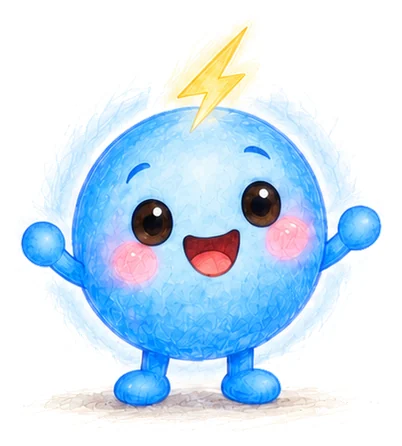
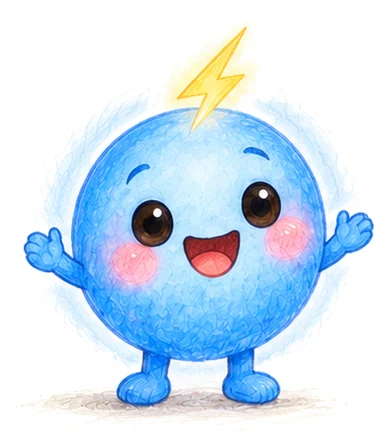
I'm Zippy, a tiny electron. Let's find out!
Zippy is a tiny round blue electron with a yellow spark on top. Wires are full of tiny electrons, like Zippy!
Keep asking
Next question

How Things Work
Why does a balloon stick to my hair when I rub it?
with Zippy · 3 min
More from How Things Work




For grown-ups
Our videos are made for kids and play on YouTube. If your child watches in the YouTube Kids app with "approved content only", you can add our channel in three steps. See how.
No ads, no sign-up, no cookies, no tracking.