

Animals, Plants & Seasons 2-minute video · ages 4-8 · free coloring page
Why do turkeys' heads change color?
Whoa, look! His head is blue! Why do turkeys' heads change color?
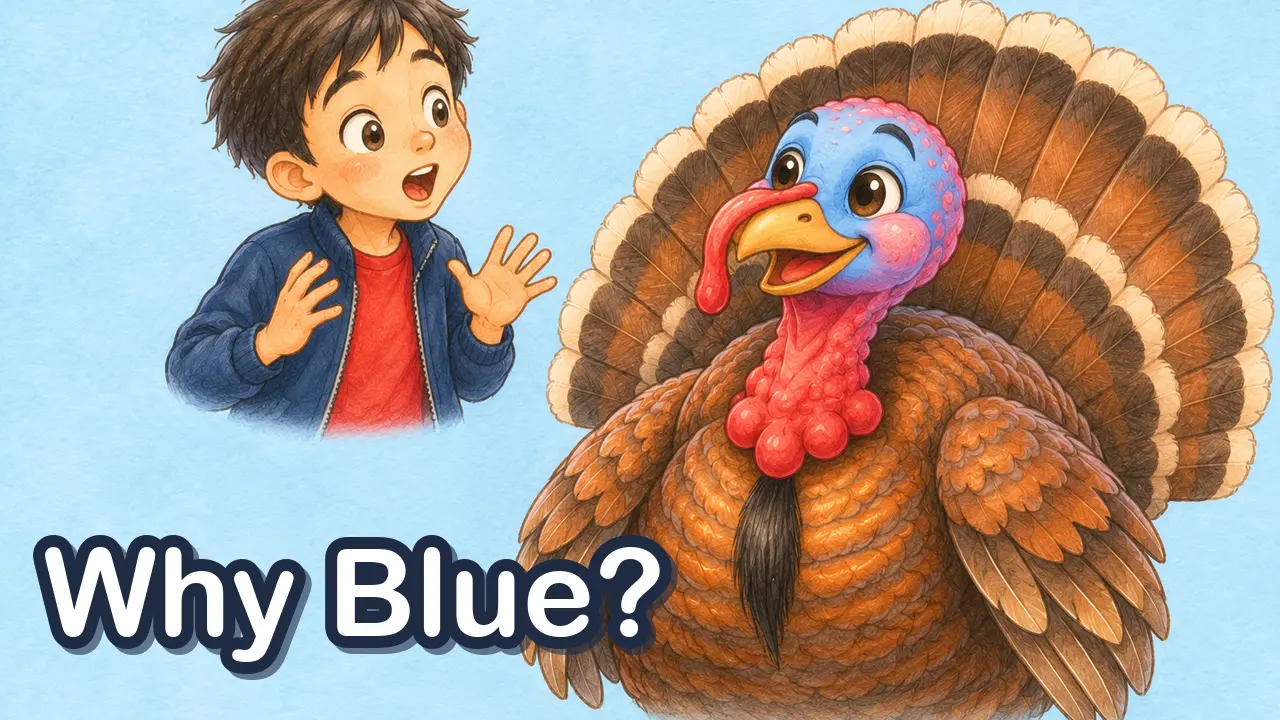 2 min
If the video does not start, use the YouTube button.
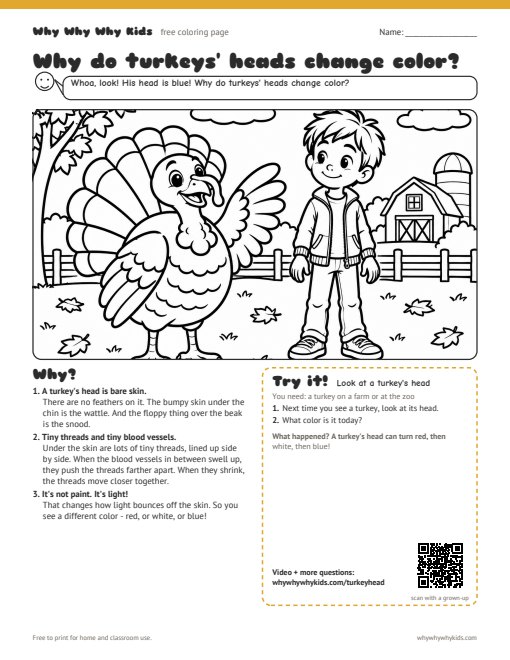
Print, color, try
Free coloring page
The scene from the video as a coloring page, plus the three-sentence answer, the experiment, and a QR code back to this page. One sheet, US Letter, black and white.
The answer in three parts
Why?
-
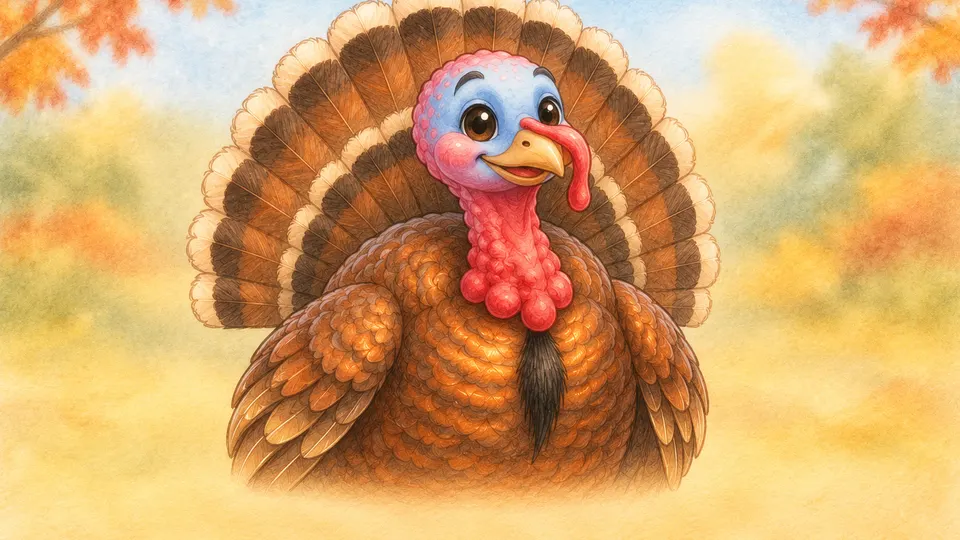
A turkey's head is bare skin.
There are no feathers on it. The bumpy skin under the chin is the wattle. And the floppy thing over the beak is the snood.
-
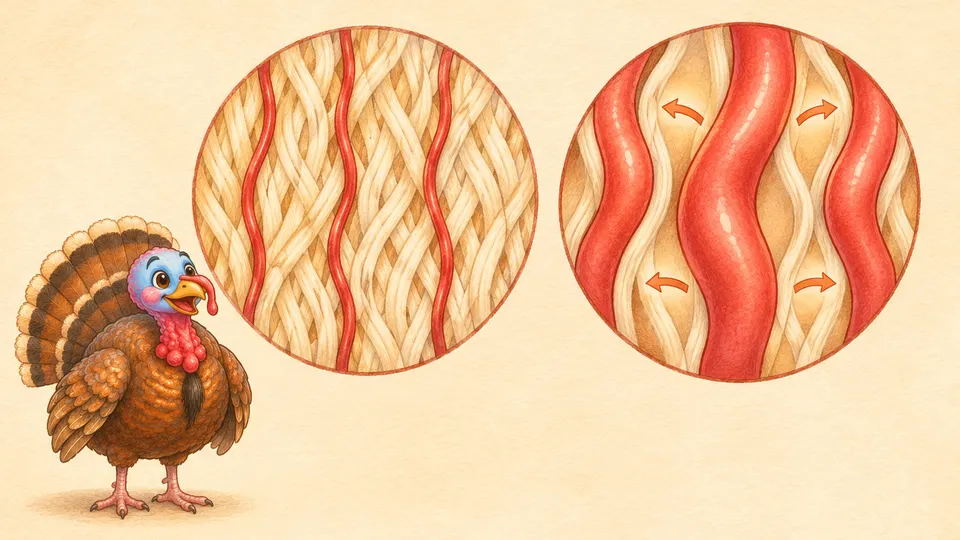
Tiny threads and tiny blood vessels.
Under the skin are lots of tiny threads, lined up side by side. When the blood vessels in between swell up, they push the threads farther apart. When they shrink, the threads move closer together.
-
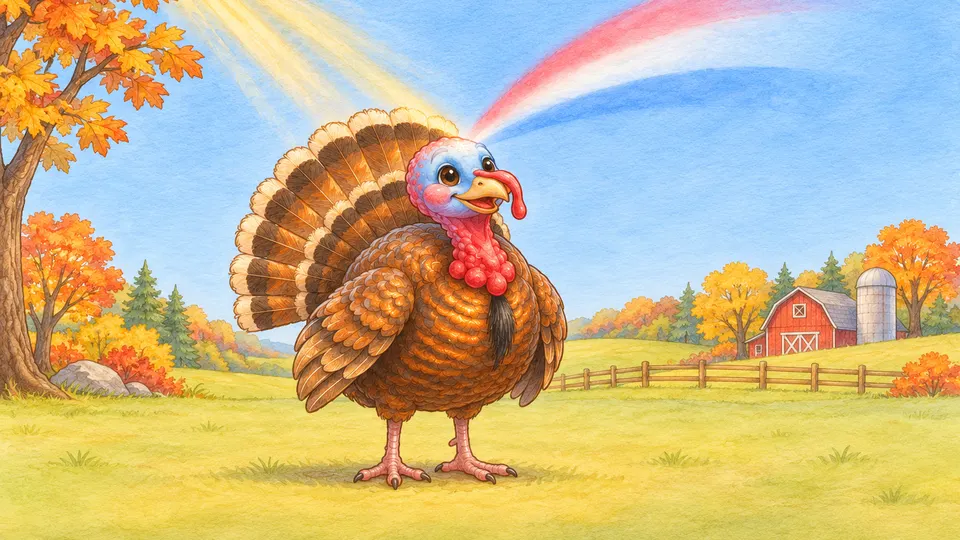
It's not paint. It's light!
That changes how light bounces off the skin. So you see a different color - red, or white, or blue!
For grown-ups: A tom's head changes color when he gets excited, or upset, or when his mood changes. When he shows off for the hens, he puffs up his feathers, and his head gets bright red, white and blue. Do scientists know what every color means? Not yet! It's still a bit of a mystery.
Tom's head
- Bare skinno feathers on the head
- Wattlethe bumpy skin under the chin
- Snoodthe floppy thing over the beak
A tiny experiment
Try it!
Look at a turkey's head
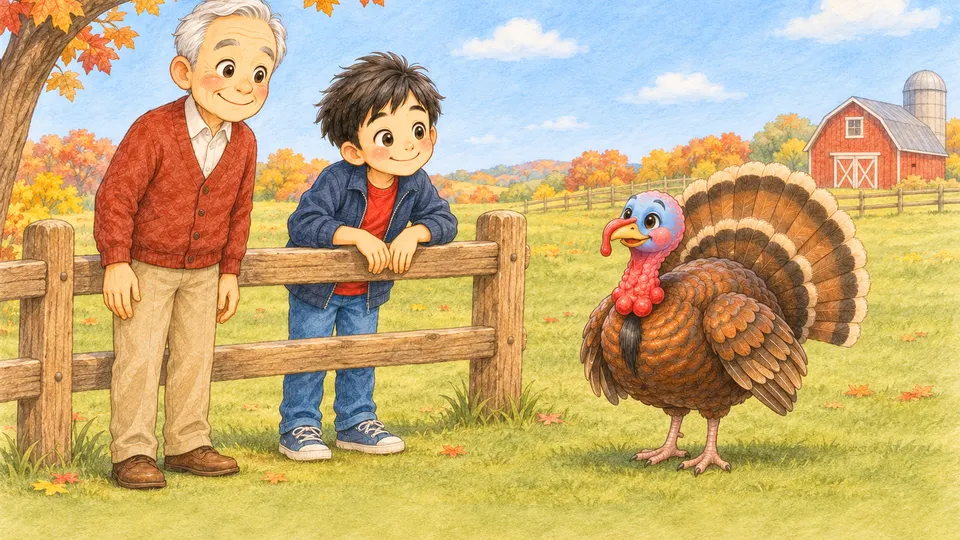
You need: a turkey on a farm or at the zoo
- Next time you see a turkey, look at its head.
- What color is it today?
What happened? A turkey's head can turn red, then white, then blue!
Did you know?
Turkeys can't sweat like you. So on hot days, a turkey's bare skin helps let out extra heat.
Girl turkeys are called hens. Hens have some feathers on their heads, and their colors are much plainer than a tom's. And hens like toms with a long snood!
For teachers Grades K-2 · discussion and printables
A curiosity question with no matching K-2 NGSS performance expectation. It still works as a speaking-and-listening warm-up.
Use it in class
- Before the video. Ask: "How do you think a turkey's head can change color?" Let them guess first: I think ... because ...
- Watch the 2-minute video together (it plays on the board through YouTube).
- After the video. Which guess was closest? Then ask: "What are the wattle and the snood?" and "Is the color on a turkey's head paint?" The three "Why?" points above have the answers. Do "Look at a turkey's head" as a class demo.
- Color and explain. Hand out the coloring page (PDF); students tell a partner one thing they learned.
Words to know
- wattle
- the bumpy skin under a turkey's chin
- snood
- the floppy skin over a turkey's beak
- vessels
- tubes that carry blood
ELA: SL.K.2 / SL.1.2 / SL.2.2 - ask and answer questions about information presented in a video. More for class: teachers page · Animals, Plants & Seasons question list.
Your guide in this video
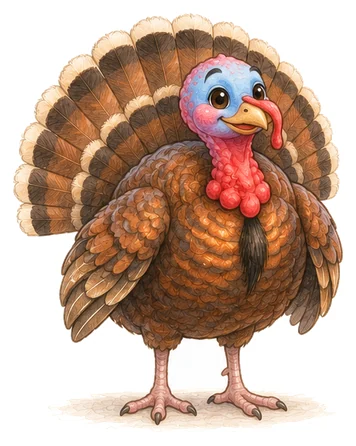
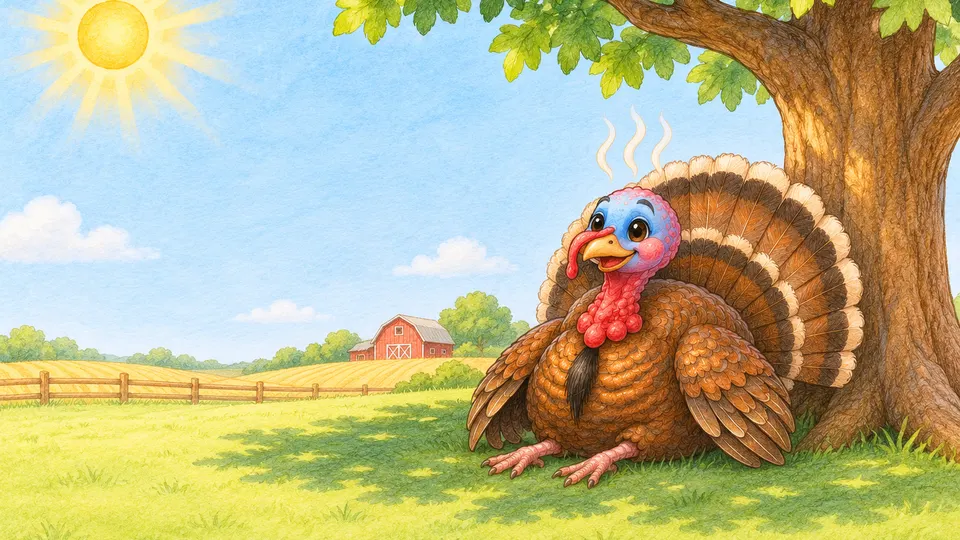
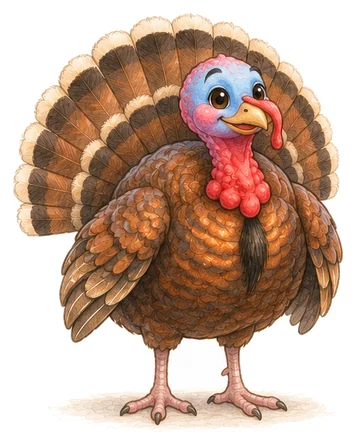
I'm Tom, a wild turkey. Let's find out!
Tom is a wild turkey, a boy turkey. His bare head can change color.
Keep asking
Next question
Animals, Plants & Seasons
Why do turkeys gobble?
with Tom · 2 min
More from Animals, Plants & Seasons
For grown-ups
Our videos are made for kids and play on YouTube. If your child watches in the YouTube Kids app with "approved content only", you can add our channel in three steps. See how.
No ads, no sign-up, no cookies, no tracking.